

.webp)
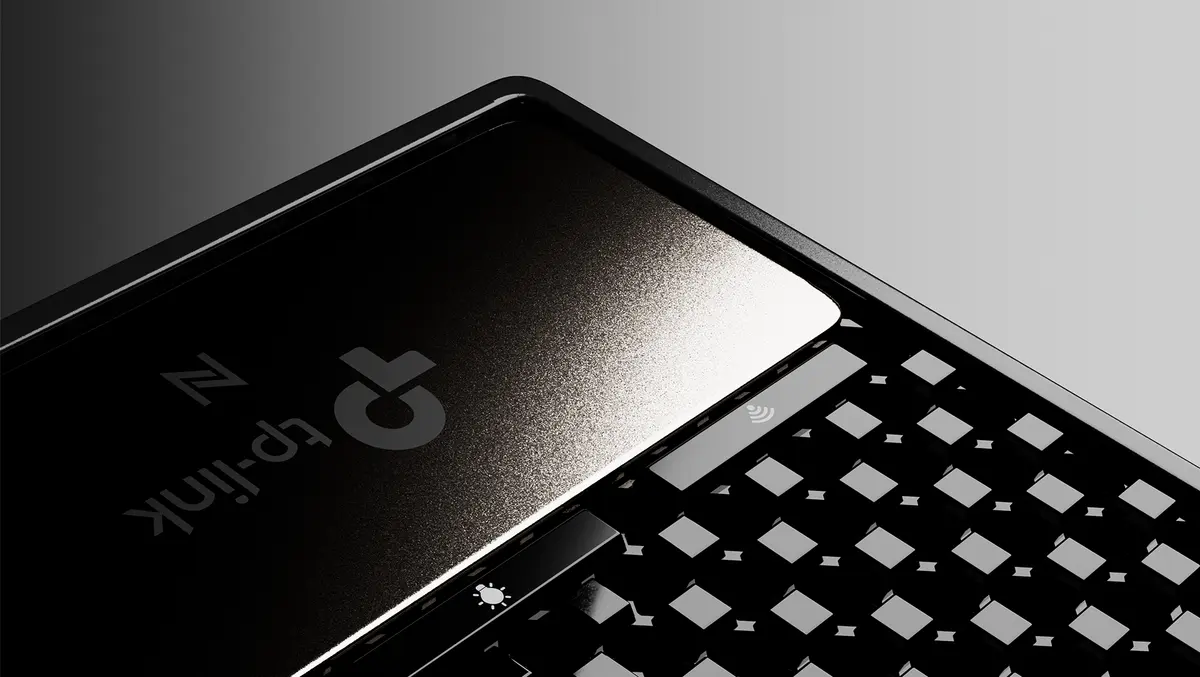
TP-Link has unveiled Archer 8, its first Wi-Fi 8 router platform, marking the start of a broader Wi-Fi 8 consumer networking range.
The line-up is expected to include the Deco 8 mesh system, the Roam 8 travel router, and a series of Wi-Fi 8 range extenders and adapters. Archer 8 is based on the emerging IEEE 802.11bn specification, which TP-Link describes as focusing on reliability rather than headline peak speeds.
The move comes as networking suppliers try to define what will set the next generation of home Wi-Fi apart from Wi-Fi 7. TP-Link argues that households are affected more by dropouts, inconsistent room-to-room coverage and congestion from multiple devices than by the highest theoretical speed a router can deliver.
To support that case, TP-Link released internal laboratory test results comparing early Wi-Fi 8 implementations with Wi-Fi 7 under simulated home conditions. The tests examined range, multi-floor coverage, interference between access points and performance with several devices connected at once.
According to the company, the early results showed up to 33% higher throughput from modulation and coding changes, and up to 24% higher throughput through unequal modulation methods designed to keep performance steadier when signal quality varies across spatial streams. It also reported up to 15% higher throughput between multiple access points in interference-heavy conditions through changes to spatial reuse coordination.
For larger homes, TP-Link said its testing showed up to 30% signal-performance improvement in multi-floor environments for single-device connections, and 10% to 20% improvement in multi-device environments. It also cited a 1 to 3 dB gain in receive sensitivity on the 5 GHz and 6 GHz bands through RF optimisation.
Those figures have not been independently verified, but they offer an early indication of how vendors are positioning Wi-Fi 8. Rather than presenting the technology mainly as a jump in headline speed, suppliers are starting to frame it as a way to make wireless networks behave more consistently in crowded homes with many connected devices.
Australian households have become more dependent on stable wireless connections as video streaming, gaming, video calls and smart home devices place greater demands on home networks. Multi-level homes and mesh deployments can add further strain as users move between rooms or as several family members are online at the same time.
Archer 8 was designed with those conditions in mind, TP-Link said, including unstable roaming in mesh systems and latency spikes during everyday use. The company also pointed to antenna design, thermal engineering and AI-assisted optimisation as part of the platform architecture, though it did not disclose local specifications or pricing.
Neville Wang, Managing Director of TP-Link Australia and New Zealand, said the company wanted to focus attention on what users notice in everyday household use rather than on peak technical numbers alone.
"Wi-Fi has always been sold on peak speed, but that is not what households experience day to day," Wang said.
"What people actually notice is the dropout in the back bedroom, the lag when the whole family is on at once, the video call that freezes when someone else hits a stream. Archer 8 is engineered for those conditions, and the early lab data tells us it is a meaningful step forward for the homes we connect."
Portfolio plans
Beyond the flagship router, TP-Link is preparing a broader push across several categories of home connectivity hardware. That matters because consumer Wi-Fi upgrades often extend beyond a single router to mesh systems, repeaters and adapters that need to work together across a property.
Its Wi-Fi 8 plans are intended to cover fixed home networking, whole-home mesh and portable use. By outlining several product categories at once, TP-Link is seeking to establish an early position in a market still at the beginning of the Wi-Fi 8 transition.
Regional availability in Australia and New Zealand, along with final technical specifications and local pricing, will be disclosed closer to launch. For now, the announcement offers the clearest indication yet of how a major consumer networking brand intends to market Wi-Fi 8: as a way to reduce the weak spots, interference and instability that shape how home internet connections are actually experienced.