

AWS helps NASA beam live 4K Moon video to millions
Wed, 15th Jul 2026.webp)
Amazon Web Services helped NASA deliver a live 4K video stream from the Moon during the Artemis II mission, reaching about 25 million viewers.
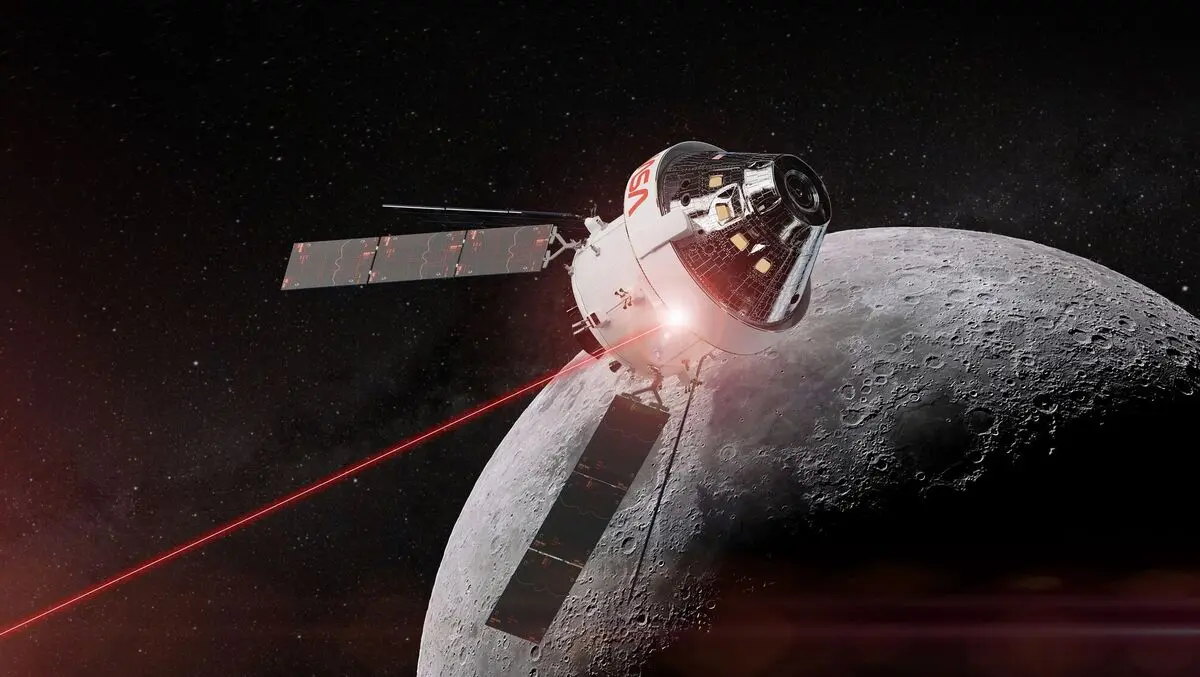
The stream used NASA's Orion Artemis II Optical Communications System, or O2O, which sent video by laser from the Orion spacecraft to Earth as astronauts rounded the Moon.
The mission was the first crewed voyage to the Moon since Apollo 17 in 1972. Artemis II launched with four astronauts aboard Orion, and the live video feed was part of NASA's broader public broadcast across NASA+, YouTube and Prime Video.
Mission computing
Behind the broadcast, NASA used cloud computing to support trajectory design and mission operations. The Orion flight sciences team at NASA's Johnson Space Centre ran tens of thousands of simulations across normal and abnormal flight scenarios, generating between two and five terabytes of data for each possible launch window.
The work ran in AWS GovCloud, an environment for government workloads. In the first 48 hours after launch, the system processed thousands of compute hours as teams recalculated and adjusted the spacecraft's flight path in near real time.
Booz Allen Hamilton built the system using cloud bursting, allowing NASA analysts to tap additional Intel-based cloud instances when demand rose. That reduced reliance on shared on-premises systems, where access can be limited by competing mission schedules.
Laser link
The video transmission depended on a laser communications terminal NASA has been developing for more than two decades. O2O can transmit data from Orion at speeds of up to 260 megabits per second, enough for real-time 4K video.
One of the system's key ground terminals is at the Australian National University's Mount Stromlo Observatory near Canberra. The site received laser downlinks when Orion moved through parts of its trajectory visible from the Southern Hemisphere.
NASA then needed to move the signal from Australia to the White Sands Complex in New Mexico, where mission operations teams could process and distribute the footage. AWS provided the terrestrial network path for that part of the journey.
AWS, NASA and the Australian National University set up the connection in a matter of weeks. The signal was routed from Mount Stromlo to a network node in Australia, then across AWS's global backbone to New Mexico, covering roughly 15,000 kilometres in milliseconds.
The link was built for the cost of a laptop, though the release did not give a more precise figure.
Global distribution
Once the footage reached NASA's systems, the agency used AWS Elemental media services to prepare it for distribution. MediaLive handled live video encoding, while MediaConnect moved the feed to external distribution partners including YouTube and Prime Video.
NASA+ served as the central hub for Artemis II coverage. Broadcasts covered launch, lunar flyby and splashdown, with a continuous feed running between those events. Production spanned four NASA centres linked through a cloud-based workflow.
Prime Video carried the feed as part of NASA's effort to broaden public access to mission coverage. NASA distributed the streams free of charge.
The full route for the 4K video stretched from Orion near the Moon to Australia by laser, then across terrestrial fibre to the United States, before encoding and onward delivery to viewers on phones and televisions. The release described the end-to-end path as spanning more than a quarter of a million miles.
Next mission
NASA is treating Artemis II as a test case for larger audience demand on later lunar missions. The agency expects Artemis IV, planned as the next human lunar landing mission, to attract about 250 million viewers.
That makes the Artemis II transmission significant beyond the technical milestone of sending live 4K video from lunar distance. It also gave NASA and its technology partners a live test of how mission data, cloud computing and consumer streaming infrastructure can be integrated for a mass audience.
The scale of public interest was already evident at launch, when an estimated 25 million people watched live coverage across NASA+, YouTube and Prime Video. Days later, millions more tuned in to watch astronauts circle the Moon through a laser-delivered video feed from deep space.
For NASA, the project combined long-running work on optical communications with a rapidly assembled network on Earth. For AWS, it placed its cloud and media systems inside one of the most visible public broadcasts in spaceflight, linking a receiving station in Australia with mission operations in New Mexico and viewers around the world.