

Subco completes SMAP cable splice on Sydney-Perth link
Thu, 16th Apr 2026.webp)
SUBCO has completed the final splice on its SMAP submarine cable linking Sydney, Melbourne, Adelaide and Perth, marking the end of wet plant construction on the 5,000 km system.
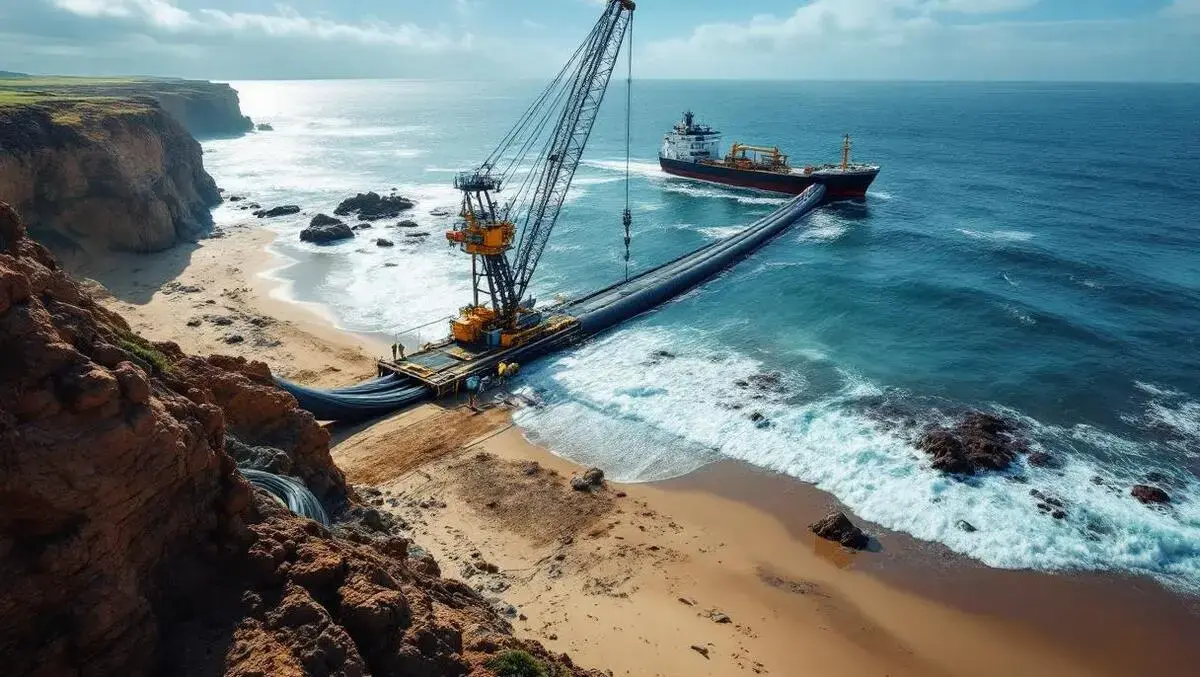
The last splice was completed in Victorian waters off the Surf Coast between the two Torquay branching units. All 16 fibre pairs are now connected across the full route, allowing engineering and operations teams to begin end-to-end system acceptance testing and commissioning before the cable enters service.
SMAP is designed to carry more than 400 Tbps across Australia's domestic connectivity market, which SUBCO says would represent the country's largest transcontinental capacity upgrade in nearly 25 years.
The project links Australia's four largest cities through a single subsea system. Fully armoured, the cable is intended to provide an additional route with greater resilience on the Sydney-Perth corridor.
The final splice is a key stage in subsea cable construction, completing the physical marine build and moving the system into testing. It follows the deployment of all 59 repeaters, the completion of all four cable landings and the commissioning of terrestrial backhaul along the route.
"The final splice on SMAP is a moment I'm incredibly proud of. Since 2020, we have been strongly advocating that Australia has an outsized role to play as a secure connectivity hub for the Indo-Pacific region and we've been investing heavily to make that vision a reality. This project has been one of the most complex subsea cable programmes ever undertaken in Australia, and getting to this point is a testament to the extraordinary effort of our team and the confidence our customers have placed in us," said Bevan Slattery, Founder & Co-CEO, SUBCO.
Subsea cable systems form the backbone of domestic and international data traffic, and new routes are closely watched by cloud providers, telecom operators and data centre groups because they affect network diversity and available capacity between major markets. Australia has seen a wave of investment in new cable infrastructure in recent years as demand for data transport has grown and operators seek routes that reduce dependence on a limited number of corridors.
Route build
SMAP takes its name from the cities on its route: Sydney, Melbourne, Adelaide and Perth. The Torquay connection point in Victoria is one of the system's key branching locations, and completion of the splice there closes a long marine construction programme involving the laying and connection of cable sections across the southern coast.
SUBCO describes the system as Australia's first "hypercable", its term for a high-capacity subsea route built with 16 fibre pairs and space division multiplexing technology. It also says the cable will become one of the world's highest-capacity undersea systems once it enters service.
SUBCO has invested nearly AUD $750 million across its portfolio to date. That includes other submarine cable projects such as OAC and INDIGO, and the company has recently outlined further expansion of its domestic footprint, including geographically separate inter-capital routes on the Sydney-Melbourne corridor and additional access points in data centres across the four major capitals.
Testing phase
With the marine section now complete, attention turns to system acceptance testing. This usually involves confirming optical performance across the full route, validating repeater operation, checking power feed systems and ensuring the network works as designed before traffic is carried on the cable.
For customers, the significance lies in the shift from construction risk to commissioning. At this stage, buyers of capacity can prepare for service activation with greater certainty around delivery timelines, subject to successful test results.
The addition of a new transcontinental route also matters because Australia's east-west connectivity is strategically important for cloud traffic, enterprise communications and links between domestic landing stations that connect onward to international systems. Extra paths can help operators manage outages and maintenance events while broadening network design options.
SUBCO has also disclosed plans for APX East, a separate cable project intended to connect Australia directly with the mainland United States. While that system remains under development, SMAP is the domestic project closest to entering service as the company moves from marine construction into final commissioning.
The completed splice off the Victorian coast means all fibre pairs are now connected from Sydney to Perth via Melbourne and Adelaide, with wet plant construction finished following the deployment of 59 repeaters and four cable landings across the route.