

Exclusive: Ericsson brings private 5G power to mining
Tue, 28th Oct 2025
The future of mining may depend on a signal.
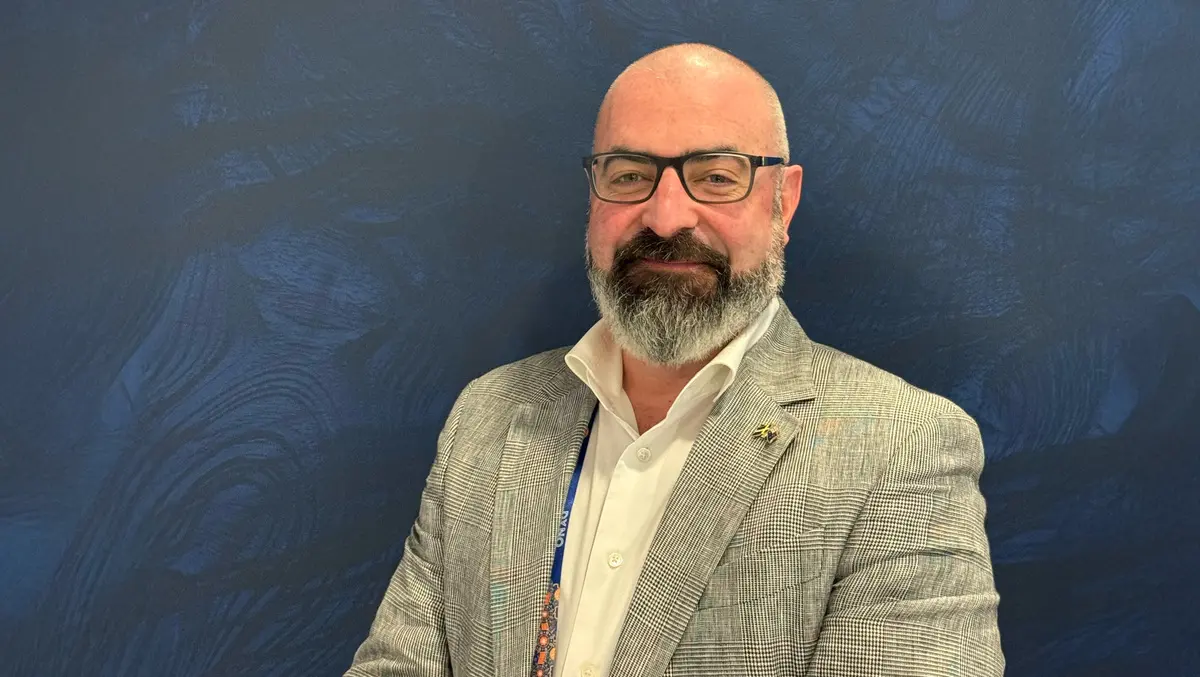
At Sydney's International Mining and Resources Conference (IMARC) conference last week, Ian Ross, Head of Enterprise Private Networks Australia and New Zealand, Enterprise Wireless Solutions, Ericsson revealed how its private 5G networks are transforming the mining industry by delivering safer, more efficient and more connected operations in some of the harshest environments on earth.
Ross sat down with TechDay following the ribbon-cutting ceremony at the Business Sweden stand at IMARC, which he described as "a symbol of collaboration between Sweden and Australia."
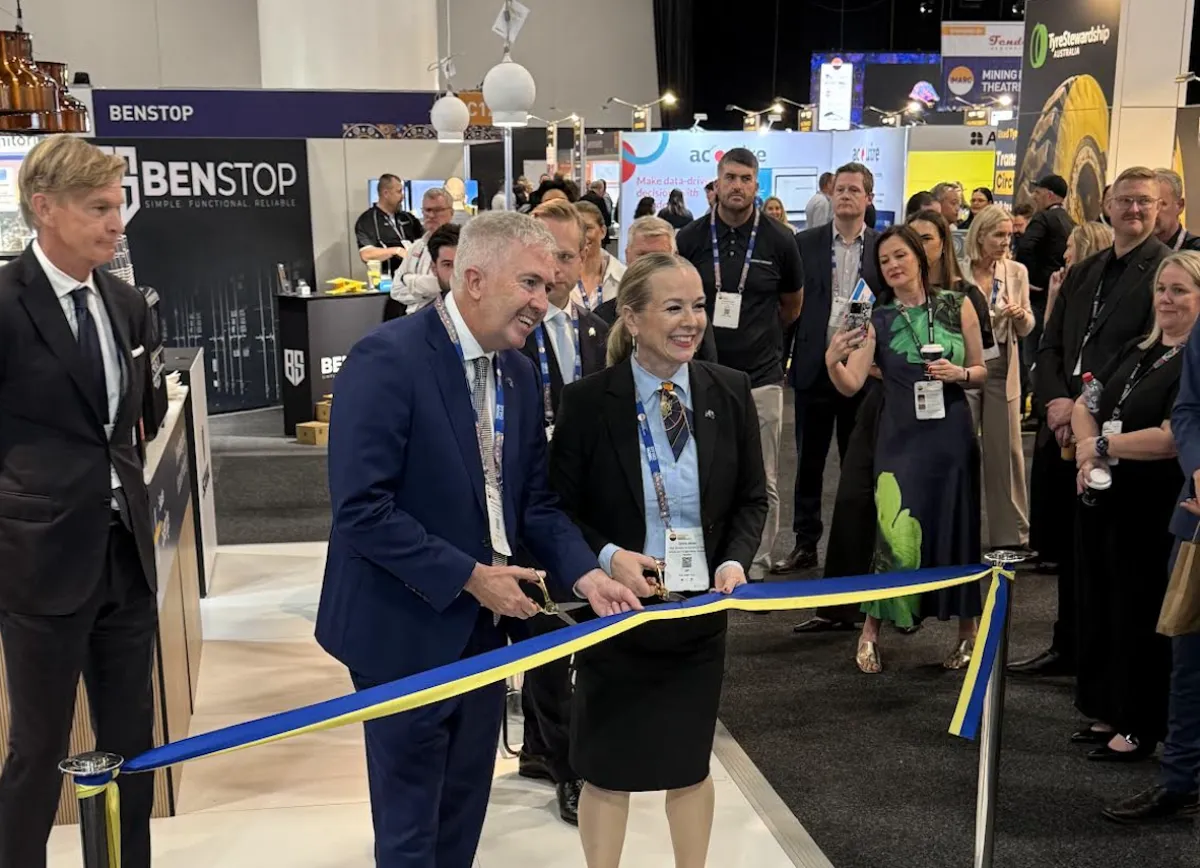
"Ericsson is a very proud Swedish company," he said. "We've been in Australia for 135 years, and we value our relationship with Team Sweden very, very highly."
The ceremony brought together Swedish and Australian dignitaries, including His Excellency Mr Klas Molin, Ambassador of Sweden to Australia and New Zealand, Diana Janse, State Secretary at the Swedish Ministry for Foreign Affairs, and Senator Anthony Chisholm, Assistant Minister for Resources.
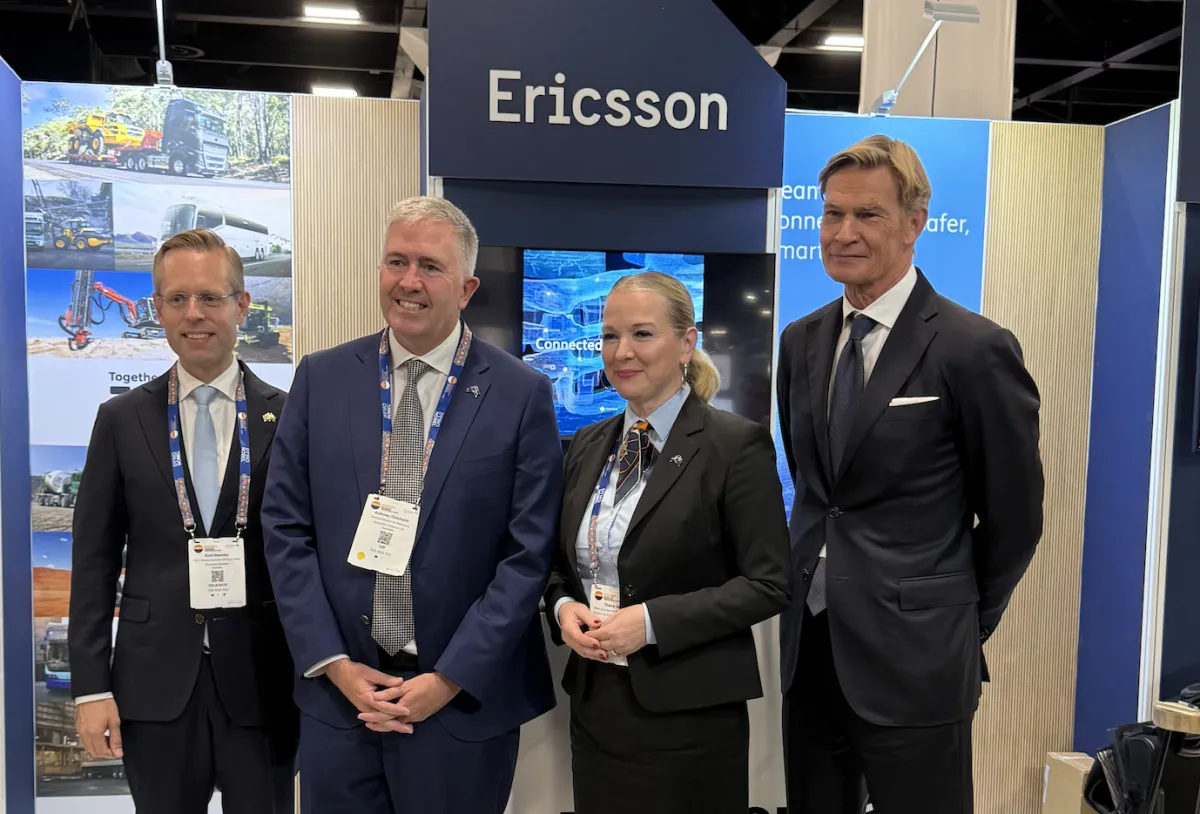
Ross said the ribbon cutting marked the commitment of Swedish innovation to the Australian mining sector, alongside companies such as Volvo, Sandvik, ReVibe and Scania.
For Ericsson, mining has become a natural proving ground for 5G.
Ross explained that the industry's increasing use of automation and digital systems has exposed the limits of traditional connectivity. Wi-Fi, he said, is simply not designed for the scale or reliability that large open-pit or underground mines demand.
"Wi-Fi is great for inside buildings," he explained, "but when you go outdoors you need a lot of infrastructure to cover very large areas. Mines are often five or ten kilometres wide. 5G provides that coverage at a much lower cost per kilometre squared, with the reliability that mining operations demand."
He added that 5G's high data capacity and ultra-low latency are essential for supporting remote machinery, live video feeds and thousands of sensors working simultaneously in mission-critical environments.
"These new technologies are demanding more in terms of connectivity, often beyond what legacy systems can provide," he said.
That need for reliability has become starkly clear at Newmont's Cadia mine in New South Wales, where Ericsson's private 5G network is powering tele-remote dozers used to remediate a tailings dam wall. Safety guidelines prevent staff from operating heavy equipment within vicinity of the structure, meaning vehicles must be controlled remotely.
"The network demands of a fleet of remote-control dozers with multiple high-definition cameras exceed what Wi-Fi can deliver," Ross explained. "With 5G, operators can now control the dozers from up to three kilometres away."
The project involves shifting 8.5 million cubic metres of earth - enough to fill the MCG six times - and 5G has enabled Newmont to connect and control a larger fleet of dozers than ever before. The benefits have gone far beyond connectivity.
"Operators used to spend half a shift troubleshooting Wi-Fi issues," Ross said. "Now they can just get on with the job. They're pushing dirt rather than chasing signal all day."
He said morale and safety have both improved dramatically. With reliable video links and real-time control, workers are no longer exposed to risk or forced to operate when visibility drops. "It's safer for the machines, and it's safer for the people," he added.
Ross believes that reliability and safety are just the beginning. The arrival of private 5G is transforming how mines think about data itself. With the ability to transmit and analyse huge volumes of information instantly, sites can move from reactive decision-making to predictive and automated operations.
"You can't drive digitalisation if you don't have connectivity to bring it all back," Ross said. "Connectivity is the enabler of all of this."
He described 5G as the backbone of a new era of "data-centric mining", where artificial intelligence and automation will optimise everything from equipment maintenance to energy use.
"We're going to have more and more machines looking for correlation between data and providing insights that we wouldn't have been able to find ourselves," he said.
The importance of 5G goes beyond the surface.
Ericsson's partnership with Swedish firm ThingWave is bringing advanced monitoring to underground mines, using "smart rock bolts" equipped with IoT sensors. These sensors transmit data on stress and strain within rock faces, creating a detailed digital twin of the mine's structure.
"It gives us almost X-ray vision into the geology of the mine," Ross explained. "You can measure what's happening inside the rock face that you cannot see."
Engineers can now assess ground stability from the surface through virtual-reality models, improving both safety and efficiency. "It means you don't need to send engineers underground to detect whether a bolt is broken or if it's a high-risk area," Ross said. "It can all be done from the safety of the surface."
He noted that such advances blur the line between safety and productivity. Real-time data allows miners to fine-tune blasting operations and respond instantly to ground movement.
"What ThingWave can do on top of the private 5G network is move ground support from being just a safety tool to a safety and productivity tool," he said.
Despite the challenges of deploying advanced networks in remote, weather-exposed areas, Ross said the evolution of 5G has made it far more accessible. Where early private 4G systems required teams of specialists and large budgets, Ericsson's latest solutions are designed for simplicity.
"You don't need to be a 5G mobile engineer with 30 years' experience," he said. "A comms technician on site can operate these networks themselves. One of our customers told us we've made 5G easier to deploy and operate than Wi-Fi."
That accessibility is opening the door for smaller operators to join the digital revolution. "It's almost the democratisation of connectivity," Ross said. "You don't need to be a Tier One miner anymore to use this technology."
As IMARC welcomed thousands of delegates eager to explore the future of mining, Ross said the interest around 5G was palpable. The technology is no longer theoretical - it is now the invisible infrastructure powering the next phase of the industry's evolution.
"There's a lot of interest in what's happening in the 5G space," he said. "People want to know how to introduce this in their operations - and that's exactly what we're here to show."