

Enclustra expands Singapore space push with Asia hiring
Tue, 2nd Jun 2026.webp)
Enclustra is stepping up its push into Asia's space communications market, with the effort centred on Singapore.
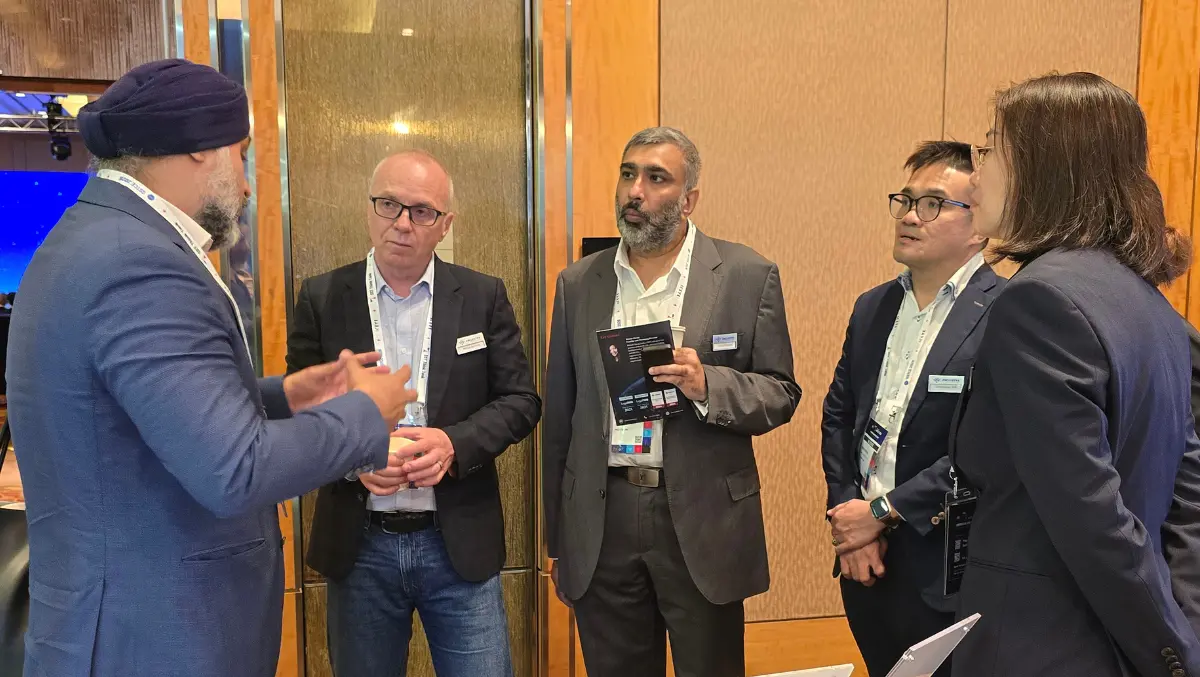
At a Singapore industry event, the Swiss FPGA developer outlined work with Array Labs, Transcelestial and Makarena Labs in satellite radar sensing, optical communications and onboard artificial intelligence. It also plans to hire about 100 design engineers, sales staff and marketing employees in the region over the next four years.
The move comes as space and Earth observation companies try to turn pilot projects into repeat business. Many customers have been slow to adopt data and analytics services because of concerns about return on investment, system integration and commercial terms.
Enclustra's products are based on field-programmable gate arrays, or FPGAs, which can be reconfigured after deployment. In space systems, that allows hardware to adapt to changing mission requirements without redesigning an entire platform.
Regional hiring
Singapore has become Enclustra's regional headquarters, and the company has already built a customer base in wireless fibre optics, robotics and aerospace. The planned recruitment drive points to a broader effort to establish the city-state as its Asia-Pacific base for engineering and commercial operations.
Philippe Bächtold, Chief Executive Officer at Enclustra, linked the company's space focus to commercial adoption. "The future of space technology depends on adaptability and the ability to translate data into real business outcomes. At Enclustra, we are driving a shift from experimental deployments to commercially viable solutions by delivering FPGA platforms that combine performance, flexibility and efficiency. Whether enabling precision Earth observation, resilient satellite communications or on-board AI inference, our work at GSTCE 2026 demonstrates how reconfigurable hardware can make space technology genuinely life-saving, life-changing - and capable of bringing humanity's greatest ambitions within reach," Bächtold said.
Prempal Hundal, Chief Operating Officer at Enclustra, set out the company's regional view. "Asia is increasingly emerging as a dynamic growth region for advanced space communications and satellite technologies, particularly as Enclustra continues to engage with stakeholders across the sector. We see significant opportunities to deepen our presence across the region by supporting organisations that are pushing the boundaries of connectivity, Earth observation and orbital infrastructure. Our goal is to play a meaningful role in enabling the next generation of high-performance space systems through reliable FPGA innovation and engineering excellence," Hundal said.
Technology tie-ups
One collaboration centres on Array Labs, where Enclustra's hardware is being used in a radar sensor system designed for satellites. The setup uses the Andromeda XZU65 System-on-Module and ST5 base board, which the companies presented as a compact package for signal processing in orbit.
Another demonstration focused on a live radio-frequency signal chain. The system monitored more than 3 GHz of instantaneous bandwidth in real time, using one module as a transmitter and another as a receiver. Enclustra presented that as evidence that reconfigurable hardware can handle large data volumes in applications including satellite communications, Earth observation and defence-related sensing.
Transcelestial, a Singapore company known for laser communications, provided the communications element of the showcase. Its optical links are designed to move data between satellites and terrestrial networks at high speed, an area of growing interest as operators look for alternatives to conventional radio-frequency links.
Makarena Labs supplied the artificial intelligence component. Its software enables real-time inference directly on FPGA platforms, allowing data to be processed onboard rather than sent back to ground systems for analysis, according to Enclustra.
Adoption gap
Enclustra linked those use cases to a wider issue in Earth observation markets. Although satellites are collecting increasing volumes of imagery and sensor data, many customers still hesitate before signing up for insight services derived from that data.
Buyers often want clearer financial returns, simpler integration with existing systems and business models that better match procurement needs, Enclustra said. The company argues that modular hardware can reduce development time and help operators adapt systems as mission demands change.
That reflects a broader industry shift. Satellite and analytics companies have spent years proving technical concepts, but many are now under pressure to show that products can move into routine operational use rather than remain specialist demonstrations.
By tying hardware, communications and onboard processing together, Enclustra is trying to position itself in the commercial layer of the market rather than solely as a component supplier. The regional expansion plan suggests it sees Asia as one of the fastest-growing markets for those systems.
Through its Singapore base, Enclustra aims to support organisations working on connectivity, Earth observation and orbital infrastructure while adding about 100 staff across engineering, sales and marketing.