

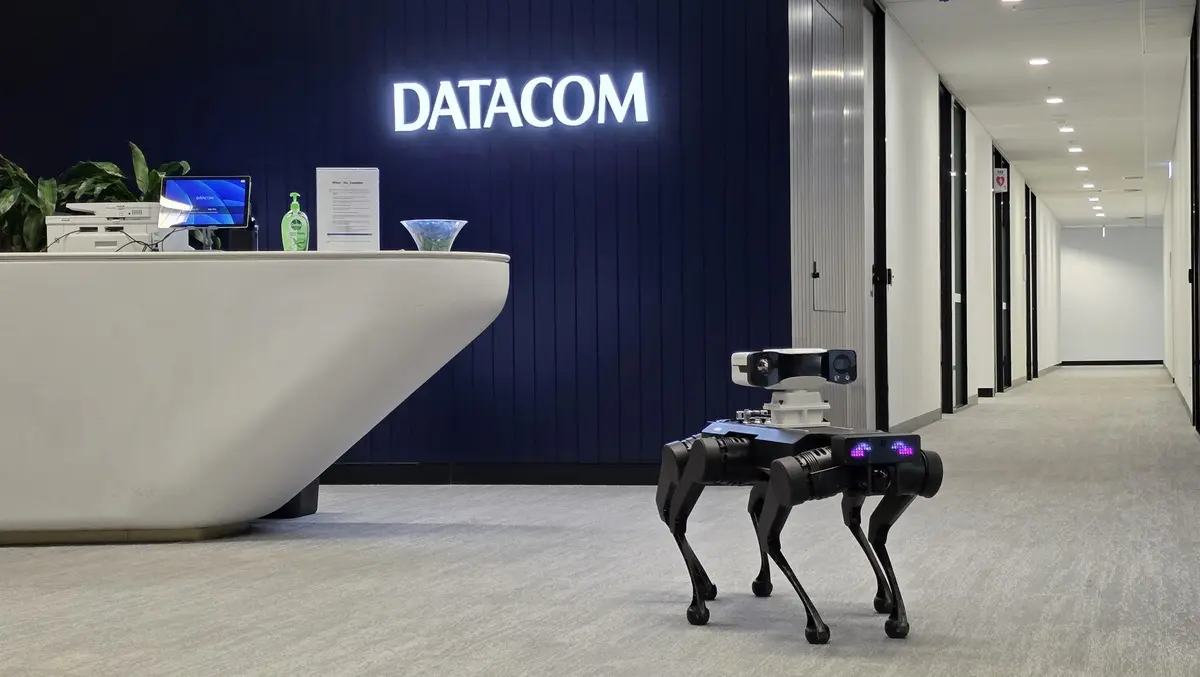
Datacom & Lenovo bring robot inspections to Australia
Fri, 26th Jun 2026
Datacom has partnered with Lenovo to bring autonomous robotic inspection systems to the Australian market. The companies describe the machines as among the first commercially available AI-based robotics products of their kind in the country.
The robots are designed for inspection and monitoring in places that are difficult or unsafe for people to access. Datacom will manage integration, deployment, AI training, maintenance and support for Australian customers, while Lenovo will supply the underlying robotics technology.
The partnership brings a form of industrial automation already under consideration in sectors such as airports, utilities and infrastructure to the local market. The machines are intended for tasks including runway and taxiway checks, electrical substation monitoring, asset inspections, and work in hazardous or confined spaces.
Unlike remote-controlled devices, the robots are designed to navigate sites independently. Using onboard AI and sensors, they can identify abnormal conditions in real time, including in settings with limited connectivity.
The dog-like machines are built to operate indoors and outdoors, cross uneven ground and climb stairs. They can also collect environmental data such as temperature and gas levels, monitor structural changes, and identify compliance issues, including missing personal protective equipment.
The systems can also connect with existing security and monitoring tools, allowing them to carry out routine patrols, investigate incidents, and send alerts to human operators when needed.
Local build-out
Datacom is investing in local AI, software and hardware teams to support the offering. The move reflects a broader effort to build domestic expertise in autonomous robotics as more organisations test physical uses for AI beyond software-based analytics and automation.
Silke Barlow, Country General Manager, Lenovo Australia, outlined Lenovo's view of the partnership. "By combining Lenovo's technology innovations with Datacom's expertise, we're helping customers explore how Physical AI can be deployed effectively within their operations. Datacom's strength in integration, services, and customer relationships makes them an ideal partner to help customers realise the full value of this technology," Barlow said.
For Datacom, a key part of the offering is tailoring each robot to the site where it will operate. That includes training the systems to recognise normal operating conditions so they can flag deviations.
"We configure and train them to understand what 'normal' looks like in a specific setting, so they can identify changes, risks, or anomalies in real time," said Greg Furlong, Associate Director of Strategy and Innovation, Datacom.
Furlong said autonomous systems could shift some risky and repetitive work away from people. "Autonomous robotics allows organisations to take a more practical approach to safety and operations - using intelligent systems to handle high-risk, repetitive tasks, while enabling people to focus on more complex and valuable work," he said.
Operational fit
The partnership comes as businesses look for clearer operational uses for AI in physical settings. Here, the focus is on routine inspection work, monitoring and site coverage rather than consumer applications.
Lou Compagnone, Director of AI, Datacom, said the value of the technology depends on how it is introduced into day-to-day work. "The opportunity with technologies like autonomous robotics is to look at the local workforce needs and operating environments and understand how these systems can be safely and effectively embedded into day-to-day operations to make people's roles safer or to take care of admin-heavy, repetitive tasks," she said.
Compagnone added that organisations would need to think beyond isolated pilots to get broader returns from such systems. "Where organisations get the most value is when they move beyond isolated use cases and start thinking about how these systems fit into their broader operations.
"That's when you begin to see more consistent, scalable impact from AI," she said.
Large-scale deployment requires more than supplying the machines themselves. Datacom will provide system integration, infrastructure and security assessments, and ongoing technical support as part of the service around the robots.
"You can't just sell a robot," Furlong said.
"There's a deep layer of integration, AI capability and ongoing support required to make it viable at scale."
Datacom also sees the launch as an early step in a market that is still taking shape in Australia. "We're at the early stage of what will be a significant shift," Furlong said.
"By getting hands-on with these technologies now, we're building the experience and capability needed to support organisations as this space evolves."
He described the offering as a practical application of AI in specific operating environments. "This is about applying AI in practical, targeted ways - focusing on areas where it can improve safety, visibility, and operational outcomes, while supporting people to do their jobs more effectively," he said.