

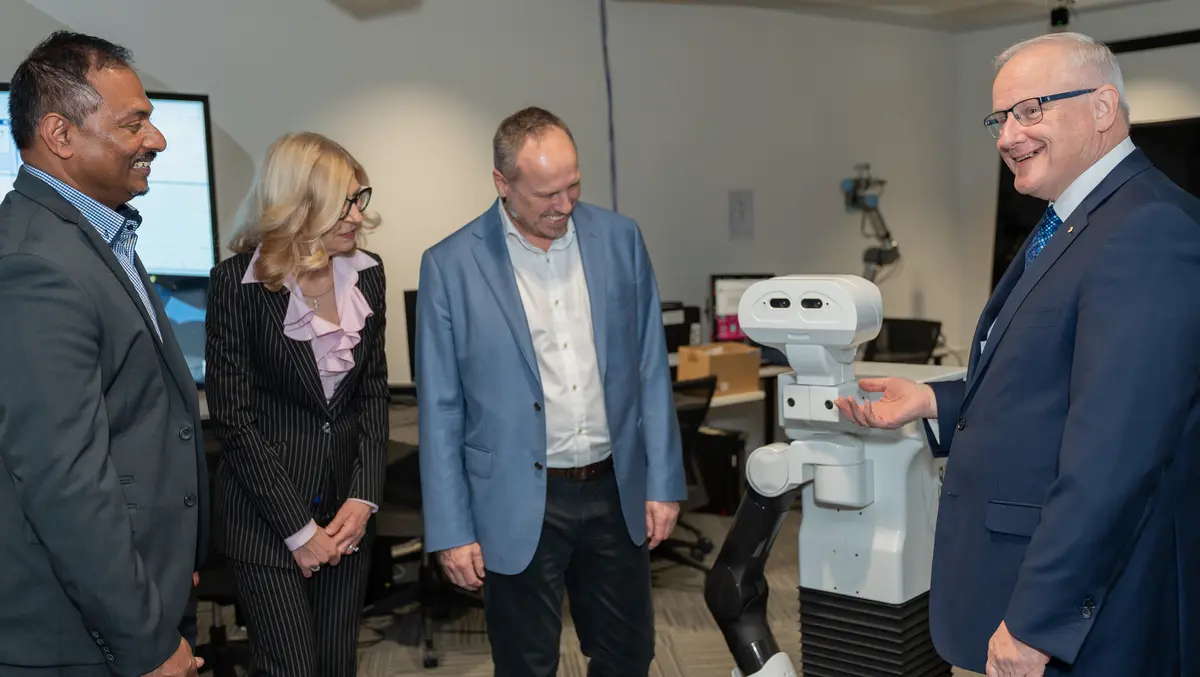

NBN Co has entered a three-year research agreement with RMIT University that will focus on robotics, artificial intelligence and digital twin technologies for Australia's broadband network.
The collaboration, named ASTRID - Advancing STEM, Technology, Research, Innovation and Deployment - brings together NBN Co engineers and RMIT academics, researchers and students. The partners plan to investigate new approaches to network planning, monitoring and management across the national broadband network.
Under the agreement, NBN Co and RMIT will establish the R-NEX Lab, described as an exploratory laboratory within the university. The lab will give NBN Co access to academic staff, students and postdoctoral researchers across multiple disciplines.
The R-NEX team will work on projects linked to NBN Co's artificial intelligence and robotics programs. It will also examine techniques for digital modelling of network infrastructure and services.
Digital twin focus
A central element of the partnership is the development of a digital twin of the nbn network. The partners plan to create a detailed virtual model that can test and simulate different scenarios and investment options.
The digital twin will use large real-world datasets from access technologies in different locations. It will support scenario planning and options analysis for upgrades, maintenance and design choices.
Guy Scott, Chief Technology Officer at NBN Co, said the two organisations had already worked together on earlier projects.
"NBN Co and RMIT are close collaborative partners, and we've achieved some great research outcomes so far.
"Through this exciting new ASTRID agreement, we expect to take things to a whole new level.
"Our focus will be the development of innovative technological advancement, with a common aim of advancing broadband technologies for households, businesses and communities across Australia.
"The Digital Twin will be a powerful tool for modelling the nbn network and our services over the next decade and beyond, using large, real-world datasets for all our access technologies in different locations.
"It will better enable us to verify forward forecasts on the physical network, cost design and lifecycle decisions.
"This is crucially important for NBN Co as we continue to optimise and maximise the performance and resilience of the nbn network to mitigate against network congestion, planned and unplanned outages and extreme weather events.
"The Digital Twin will also help build advanced knowledge of service outages, devise predictive measures and tools for forecasting network availability and performance, predict trends and scenarios, which enable proactive network management, improve resilience of the network and support the delivery of improved customer experience."
Scott said the work on digital twins would sit alongside efforts in robotics and automation. Researchers demonstrated soccer-playing robots as part of the launch activities at RMIT's Virtual Experience Lab in Melbourne.
STEM talent pipeline
The agreement also includes a focus on skills and workforce development. The partnership will foster career pathways for university graduates and postgraduate candidates at NBN Co, with an emphasis on female STEM graduates.
Students and early-career researchers will work on projects that relate directly to NBN Co's network and operations. NBN Co expects this arrangement to build a pipeline of talent with experience in large-scale digital infrastructure.
RMIT positions the collaboration as part of its broader industry engagement strategy. The university has placed applied research and work-integrated learning at the centre of its technology and engineering programmes.
Distinguished Professor Calum Drummond, Deputy Vice-Chancellor, Research and Innovation and Vice President at RMIT, said the agreement extended an existing relationship between the two organisations.
"RMIT is proud to be the first university in Victoria, and only the second in Australia, to partner with NBN Co through the ASTRID program. This partnership marks a significant milestone in advancing research and development within critical fields such as robotics, artificial intelligence, and digital twins.
"This landmark three-year collaboration builds on our existing strong relationship with NBN Co, enabling RMIT researchers, staff and students to drive advancements in network intelligence and telecommunications innovation.
"By combining RMIT's strengths across research and skills development, this partnership enhances our ability to deliver world-class learning experiences, deepens our relationships with industry, and informs national priorities.
"Together we are working to make Australia's digital infrastructure smarter, more accessible, and more resilient, while preparing our researchers and graduates to lead the next phase of transformation in the telecommunications sector," said Drummond.
Broader project scope
The ASTRID project scope covers a set of high-impact research projects in technologies related to the nbn network. These include work on network intelligence, automation and new forms of monitoring.
As part of the agreement, NBN Co and RMIT will create a strategic technology adviser role with a recognised scientific background. The adviser will focus on broadband research and emerging technologies.
The partners also plan to pursue co-funding arrangements with other national agencies. They will seek international partnerships and exchange programmes that extend the research and bring overseas collaborators into the R-NEX Lab.
NBN Co expects the collaboration with RMIT under the ASTRID framework to shape network research priorities and future skills development over the next three years.