

Australia summit to explore AI-native networks & 6G
Wed, 28th Oct 2026 (Today)
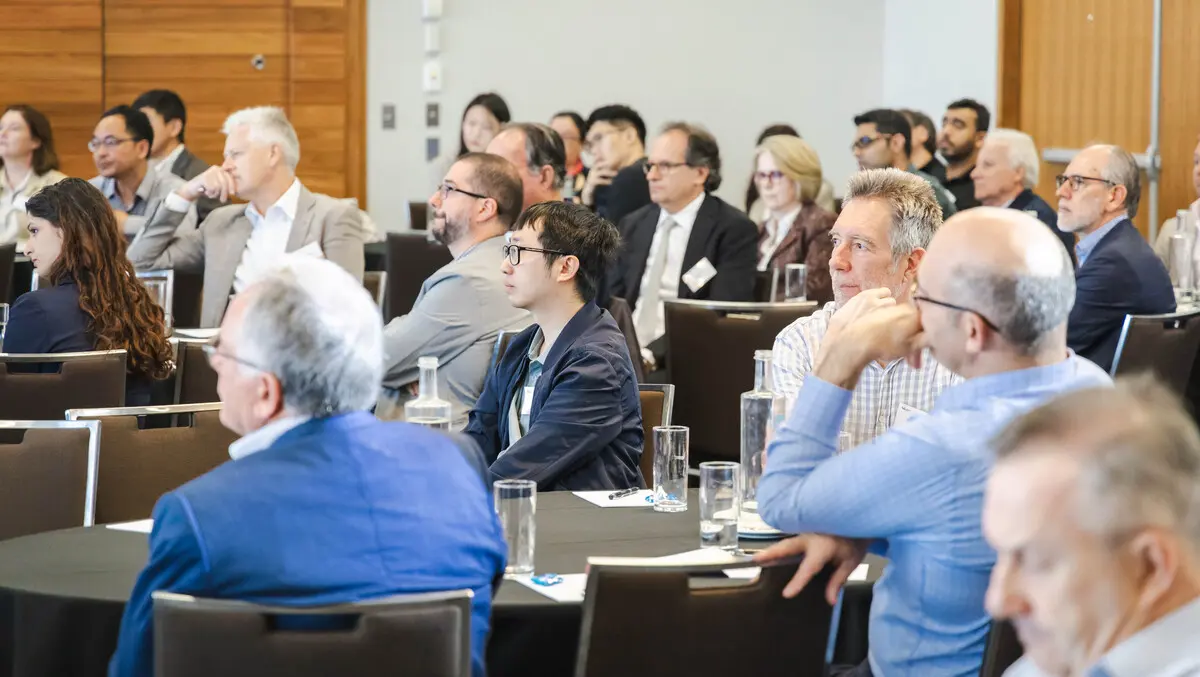
Connectivity Innovation Network will host the fifth Australian Beyond 5G Connectivity Summit in Sydney, centred on AI-native networks for Australia's 6G future.
Senior figures from Optus, Ericsson, Indara, the ACCC, the Australian Telecommunications Alliance, CSIRO, universities and emergency services organisations are due to take part in the two-day programme. The agenda will examine how artificial intelligence is reshaping telecommunications, alongside questions of spectrum, infrastructure investment, satellite integration and wireless research.
The summit comes as Australian telecoms groups consider how networks should support rising demand from AI applications and connected devices, while also adopting AI in network operations. Discussions are expected to span both established policy debates and technologies still at the research stage.
Optus Chief Technology Officer Sri Amirthalingham is set to open the programme with a keynote on what Australia needs to do to succeed in a changing connectivity environment. A fireside chat with Distinguished Professor Jay Guo, Director of Connectivity Innovation Network, will follow.
Another session will examine the interaction between 6G development, satellite services and spectrum policy. Luke Coleman, Chief Executive Officer of the Australian Telecommunications Alliance, is scheduled to address these issues as mobile operators and regulators consider how satellite-to-mobile services could fit into future network planning.
The topic carries particular weight in Australia, where extending reliable connectivity beyond metropolitan areas remains difficult. Growing interest in combining satellite and terrestrial networks has added pressure on policymakers and operators to address coverage, interoperability and the radio spectrum required for future services.
Regulation is also set to feature prominently. ACCC Commissioner Dr Ian Oppermann will outline the competition and policy regulator's view on current telecommunications issues, reflecting the broader role regulators may play as the industry moves towards new wireless standards.
Infrastructure focus
The summit will also examine the physical network assets needed to support AI-related growth. Emilio Romeo, Chief Executive Officer of Indara, is due to argue that debate around AI sovereignty should not stop at computing capacity and data centres, but should also account for the telecommunications infrastructure linking those systems to users and applications.
This emphasis reflects a wider shift in the sector. As AI workloads expand, telecoms operators are facing questions not just about consumer connectivity, but also about the resilience and reach of the links connecting data-intensive services to businesses, public agencies and regional communities.
Research agenda
Technical sessions on the second day are expected to shift from industry strategy to emerging research. David Everingham, Standards and Industry Lead Asia Pacific at Ericsson, will discuss the move from networks that use AI for specific operational tasks to networks built with AI applications in mind from the outset.
Kent Wu, Executive General Manager of Network Strategy and Technology at Optus, will examine intelligent networks, while Dr Kai Wu of UTS will look at the use of large language models for antenna beam management in 6G. Other sessions are due to cover integrated sensing and communications, terahertz wireless systems and semantic communications.
These subjects remain largely in development, but they point to the direction of travel in wireless research. Integrated sensing and communications aims to enable networks to both transmit information and gather data about their physical surroundings, while semantic communications explores whether systems should prioritise the meaning of information rather than simply moving data packets.
Public safety
Emergency services and mission-critical communications will form another strand of the programme. A panel led by Shane Fitzsimmons AO AFSM, Chair of Connectivity Innovation Network, will bring together senior emergency services representatives to discuss communications challenges and the possible role of AI.
The event will also include a session on Large Area Wi-Fi, a technology developed by Connectivity Innovation Network to extend coverage beyond conventional Wi-Fi systems. Genie Tan, Chief Operating Officer at Connectivity Innovation Network, Professor Peiyuan Qin and Matthew Ingersole, Chief Information Officer at Surf Life Saving NSW, are set to take part.
For organisations operating in remote areas, disaster zones or places with limited mobile coverage, these issues are practical rather than theoretical. The programme also includes a session from Dinesh Thamotharam, Head of Access Network Engineering at Optus, on how differentiated 5G services can support mission-critical communications and public safety.
Connectivity Innovation Network was established by the NSW Telco Authority in collaboration with the NSW Office of the Chief Scientist & Engineer and is hosted by the University of Technology Sydney. Its work focuses on telecommunications challenges including ubiquitous connectivity, power resilience, AI and cyber automation, and environmental sensing.