

Telcos reshape music streaming for local audiences
Tue, 21st Apr 2026
As global platforms compete for the same listeners with similar catalogues, a different model is gaining ground. From Greenland to Egypt to the US, mobile operators are building streaming services around specific audiences, and the results are challenging assumptions about where paid subscriber growth will come from.
The music streaming industry's first decade was shaped by a handful of global platforms competing for broadly the same listeners with broadly similar catalogues. The next phase of growth looks different. Across markets from the Middle East to Greenland to the United States, mobile operators are building or co-creating streaming services tailored to particular communities, cultures and demographics.
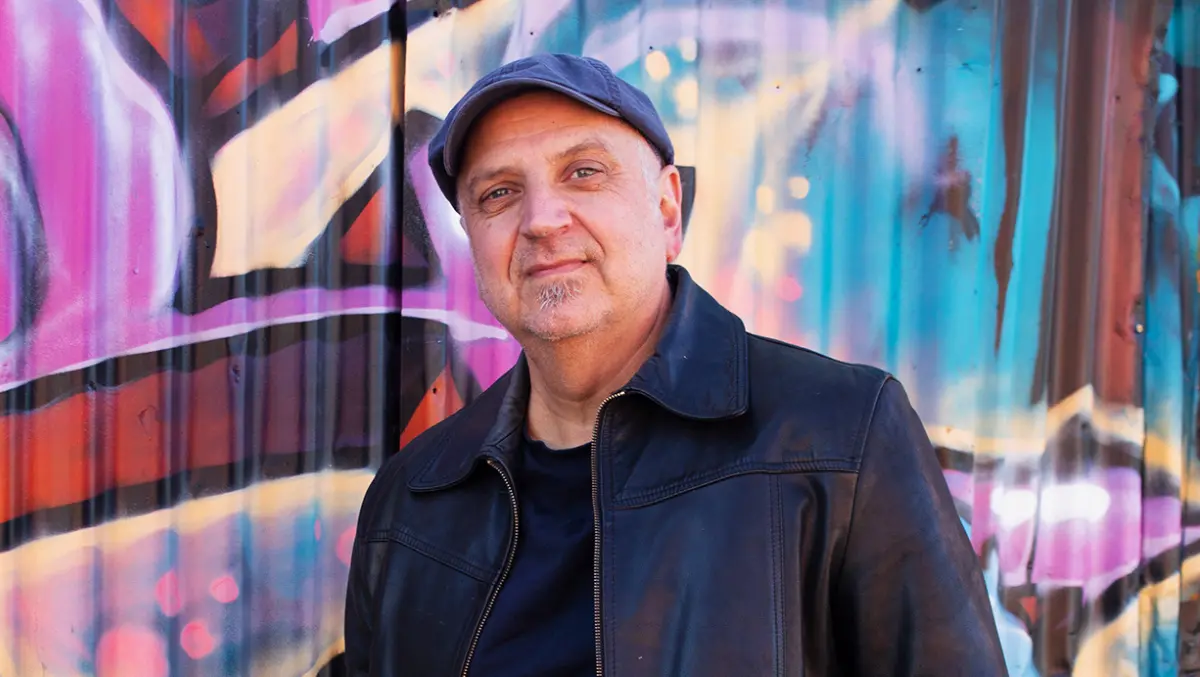
Con Raso, Managing Director of Tuned Global, the music cloud platform that powers several of these services, said operators are no longer content to resell access to third-party platforms.
When an operator bundles a third-party streaming app, its subscribers become that platform's users. The operator loses the direct relationship, has no access to listening data, and gains little long-term strategic value. Bundling functions more as an acquisition incentive, comparable to a gift card, than as a product the core business can build on.
"We're seeing first-hand how operators are moving from 'bundling someone else's app' to building or co-owning the music experience," he said.
The commercial logic rests on how people actually listen. Raso pointed to data showing that domestic music accounts for a disproportionately large share of streaming activity relative to its catalogue size in many markets.
"Listeners continue to stream a significant amount of local music, and in many markets domestic repertoire represents a disproportionately high share of actual listening compared to its catalogue size," he said.
Regional perspectives
The regional gap Raso refers to with respect to right-sizing catalogues represents an opportunity for services designed around local audiences rather than global chart programming. Tuned Global's client portfolio illustrates how varied this can look.
In Greenland, national telco Tusass operates Tusass Music, the first streaming service dedicated to Greenlandic music. Available in Greenlandic, Danish and English, Raso said the service reflects the close ties between major telcos and local culture.
"It is positioned as a way to support local indigenous artists and preserve cultural heritage, not just as an entertainment add-on," he said. "That kind of positioning is incredibly hard for a global DSP to replicate at scale."
In Ethiopia, Sewasew's partnership with Ethio Telecom follows a similar principle with different mechanics. Raso described it as a service with deep local roots, backed by operator infrastructure and a distinctive licensing arrangement.
"A local service with a unique Universal Music Group deal, offered to the telco's subscribers as part of a broader digital payments and retention strategy," he said. "It's music that speaks directly to Ethiopian culture and the diaspora, powered by the operator's reach and billing rails."
In the US, Gabb Music began as a kid-safe streaming service available only to Gabb Wireless customers, with payment handled through the mobile plan. Rather than competing on catalogue breadth, the service was built around a specific demographic and a specific parental concern. Raso said the model validated the commercial potential of that approach.
"This format proved so successful that it has since expanded beyond the telco's own subscriber base," he said.
The core value proposition remained the same even as the service grew beyond Gabb's own network.
"Peace of mind for parents and a safer first streaming experience for kids, which is a fundamentally different lens to a mainstream global service," he said.
Rhythm and relevance
Speaking to the three examples, Raso said a common thread across the different services highlighted was that they end up being shaped by their local audience, and this is reinforced by the telco's commercial assets.
"What all of these examples share is the ability to shape the product around a particular culture or audience and then use the telco's own assets, distribution, pricing, billing, zero-rating, rewards, customer care, to reinforce that positioning," he said.
"That's where bundles can really stand apart from standalone apps: they can be more local, more targeted and more embedded in everyday life."
The model has particular relevance in regions where paid streaming is still developing. MENA posted the fastest regional growth in the global recorded music market in 2024, with streaming accounting for more than 99% of revenues. But rapid growth from a small revenue base, combined with the dominance of free and video-led consumption, points to a market in its early stages.
In markets like Egypt or Ethiopia, where card payment penetration is uneven, telco billing provides the infrastructure for listeners to subscribe without new payment steps. In more digitally mature markets like the UAE and Saudi Arabia, Raso said operator-bundled services serve a different function.
"Services like e&'s Twist Music still convert heavy users of free platforms into paying subscribers, not because people can't pay, but because the telco makes the whole process easier, safer and more contextual to their daily digital life," he said.
Raso said he expects operator-led models to account for a meaningful share of new paid subscriptions across the region in the coming years.
"We're excited to witness a significant share of new paid subscriptions in MENA over the next few years to come through these operator-led or operator-bundled models," he said.
He described the broader shift as a structural change in how operators and streaming services work together.
"The relationship is shifting from commercial bundling to genuine product co-creation," he said.