

Envision launches AI power system for remote mines
Thu, 12th Nov 2026 (Today)
Envision Energy has introduced an AI-powered energy system for the mining and smelting industry, aimed at remote, off-grid and weak-grid industrial sites.
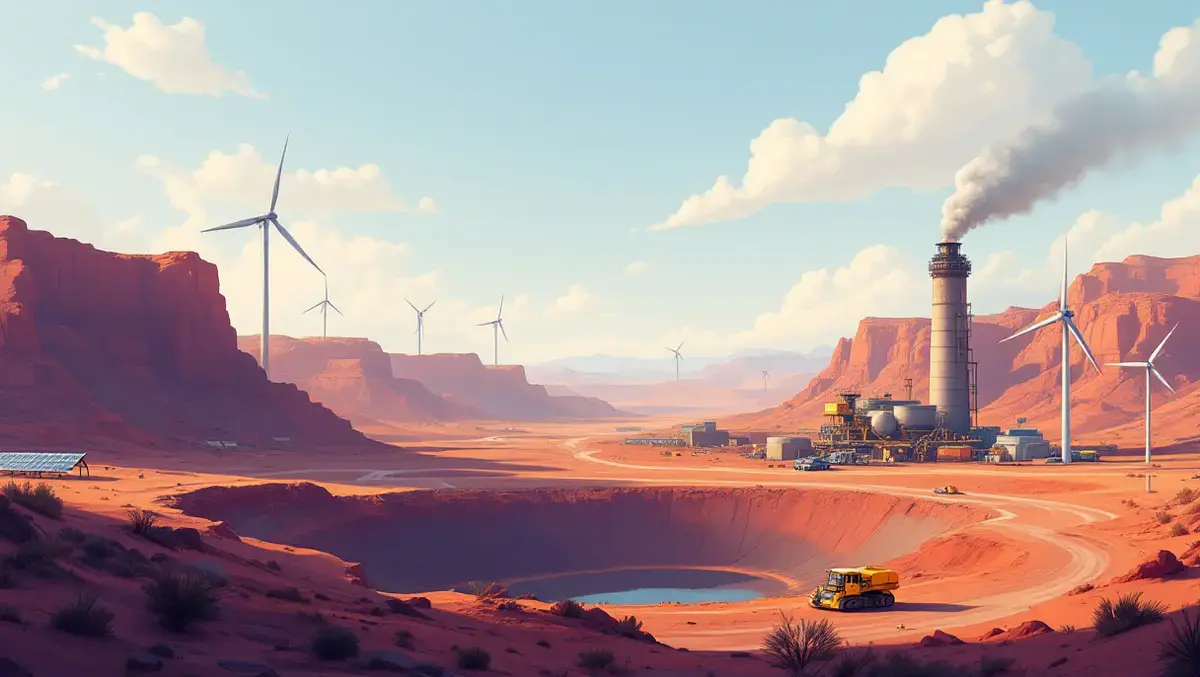
The system combines wind generation, solar power, grid-forming battery storage and backup generation using gas turbines fuelled by green hydrogen or green ammonia. It also includes an integrated dispatch and control system to manage supply and industrial demand across sites where grid access is limited or unstable.
Mining and smelting operators face a persistent challenge in securing reliable electricity for energy-intensive processes in remote locations. Many sites rely on diesel generation or constrained grid links, while producers are also under pressure to cut emissions and show customers and financiers evidence of lower-carbon production.
Envision said its weather and energy AI foundation models, together with its EnOS AI platform, are used for renewable generation forecasting, load forecasting, system planning and real-time dispatch. The aim is to coordinate generation, storage and industrial loads as operating conditions change.
According to Envision, the system is designed for grid-connected, weak-grid and off-grid environments. Wind-storage integrated turbines are used to smooth wind power output, while grid-forming battery storage is intended to support system stability.
The design includes a seven-layer protection and control framework intended to coordinate dispatch, stability control, protection and recovery. It is also designed to help the system respond to sudden load changes, maintain off-grid operation and restore supply after an outage.
Envision is targeting lower emissions from backup generation by examining green hydrogen and green ammonia as alternatives to diesel in gas turbines. The approach extends decarbonisation beyond renewable generation and battery storage into the reserve power segment that many heavy industrial sites still depend on.
The system also includes energy and carbon management functions to support product carbon-footprint accounting and provide data for green certification processes. For mining and metals producers, that data may become increasingly important as buyers seek evidence on embedded emissions in commodities and processed materials.
Envision said its offer covers planning, engineering, delivery and ongoing operations, with financing options also available. Through site-specific optimisation, the system targets about 20% lower overall energy costs, a renewable electricity share above 80% and power supply reliability above 99.95%, depending on local resources, plant configuration and production requirements.
Those figures underline the commercial case Envision is making to a sector where power interruptions can quickly affect output and costs. Smelters and processing operations typically require stable supply, and any shift away from conventional fuels depends as much on reliability as on emissions performance.
Project examples
Envision pointed to projects in Australia and China as examples of how the model can be adapted to different industrial settings. In Western Australia's Pilbara region, the company is supplying wind turbines for Fortescue's Nullagine Wind Project, part of the miner's Real Zero strategy.
In Baotou, China, Envision said it has integrated wind power, battery storage and industrial loads into an energy system for green alloy production. The project meets more than 70% of electricity demand with renewable energy and reduces annual carbon dioxide emissions by more than 200,000 tonnes.
The announcement reflects broader movement across the resources sector towards hybrid power systems that combine renewables, storage and flexible backup generation. Suppliers are increasingly focusing on remote industrial users as falling renewable energy costs, improved storage technology and stricter emissions expectations reshape investment decisions.
For miners and metals producers, the challenge is not only to add renewable generation but also to maintain round-the-clock operational stability in locations where weather conditions, variable demand and weak infrastructure can complicate system design. This has created demand for integrated systems that combine hardware with forecasting, control and optimisation software.
Envision said its latest system is designed specifically for that requirement, using AI to forecast supply and demand and adjust dispatch in real time. The objective is to lower energy costs while maintaining the reliability required by energy-intensive industrial operations.