

Brisbane start-up Burl builds heavy-lift VTOL aircraft
Wed, 25th Nov 2026 (Today)
Burl Aerospace is developing a heavy-lift aircraft capable of vertical take-off and landing. The Brisbane company says the design is meant to bridge the gap between conventional drones and helicopters.
Based at ARM Hub in Brisbane, Burl is working on an aircraft called the Birra1. It uses an 8-metre propeller-driven rotor and tilting motors to generate lift, allowing it to take off and land in a much smaller area than a helicopter, according to the company.
Burl is targeting the movement of heavy loads in places where roads, runways and ports are unavailable or unreliable. Early interest has come from defence, heavy-lift construction, disaster response and remote medical evacuation, where operators often rely on helicopters for payloads beyond the reach of most drones.
"The real market opportunity here for us, at least initially, is drones that can carry heavy weights because that's something that drones can't do," said Dr Crighton Nichols, Chief Executive Officer, Burl Aerospace.
The company says conventional drones offer stable flight but limited lifting power, while helicopters can carry more weight but come with higher operating costs and larger ground space requirements. Burl's aircraft is aimed at operators seeking a vertical-lift option for tighter sites.
One feature under development is a flight control system that avoids the moving mechanical parts commonly associated with helicopter rotor systems. According to Burl, the Birra1 can achieve directional control without physically moving flaps, tabs or canards.
"The reason we don't see helicopters everywhere is because they need a huge amount of space on the ground to get up into the air," said Nichols.
Burl says helicopters typically require a helipad of about 900 square metres, compared with 30 square metres for its aircraft. That smaller footprint is central to its pitch in remote or constrained operating environments.
Testing work
Burl moved into ARM Hub's new facility in April and began assembling and testing the aircraft there. Before securing commercial space, the company had been working from private garages.
"We were working out of our own garages and needed a commercial space with a short-term lease. ARM Hub had an immediate solution for us," said Nichols.
The move has placed the start-up alongside other early-stage engineering and manufacturing businesses. Nichols said that proximity has given Burl access to a community of founders dealing with similar development and operational challenges.
"There are other founders here that face similar challenges, and we can just chat and be a part of the community ARM Hub is building," said Nichols.
Recent milestones
Burl was founded in 2022 and is led by Nichols while operating out of the University of Queensland. It recently demonstrated a new cyclic flight control system without mechanical actuation at the DARPA Lift Challenge in Ohio, according to the company.
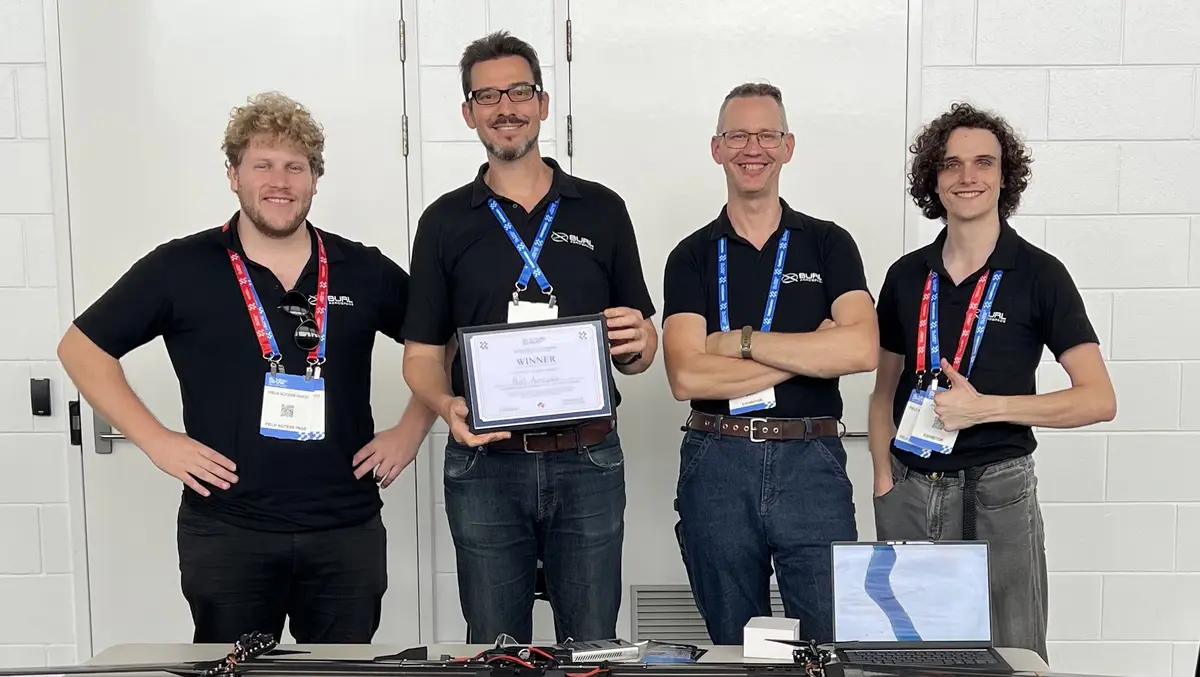
It has also gained recognition on the investor circuit, taking first place at the Future Invest Pitch Fest during the Global Drone Show on the Gold Coast. The result comes as Burl works through test flights and fundraising ahead of commercialisation.
For Burl, the next phase depends on proving the aircraft in flight and showing the control system can work consistently outside demonstration settings. The company says each test is contributing data to that process.
"The result is a simple, elegant solution that scales," said Nichols.
Burl's focus on dual-use markets reflects a broader push among aerospace start-ups to target sectors with urgent logistics needs, especially in remote operations and emergency scenarios. In Australia, where distance and terrain can limit access, that pitch may resonate with customers seeking alternatives to more expensive crewed aircraft.
Burl has not disclosed funding details or a production timetable beyond its work to bring the aircraft to market. For now, its case rests on whether it can turn technical demonstrations and early market interest into a viable aircraft for operators that need to move heavy loads without conventional infrastructure.
"With every test flight we learn something, and we're getting closer and closer to the point where we can say the technology is now proven," said Nichols.