Risk Management stories
New AI and quantum threats are shrinking defenders' response time, forcing Australian organisations to map exposure across interconnected systems before attacks hit.
Most firms still judge tech buys on upfront price, even as security, efficiency and long-term value increasingly drive business risk.
Regulatory deadlines and access risks are pushing companies to treat AI agents like privileged users, lifting demand for identity security tools.
AI-generated code is widening security gaps, with most organisations still shipping vulnerable software and CISOs under pressure to delay fixes.
Senior payments executives will debate fraud, instant transfers and AI-led commerce as Europe faces pressure to reduce dependence on non-European rails.
Businesses using AI in the European Union face new pressure to prove compliance, as the rules also reach overseas suppliers and service providers.
More than 15,000 Ventia field workers could gain AI tools to cut admin and speed decisions as the services group tests OpenAI pilots.
Longer dwell times and rising ransomware threats are exposing gaps in industrial defences, despite better OT visibility and governance.
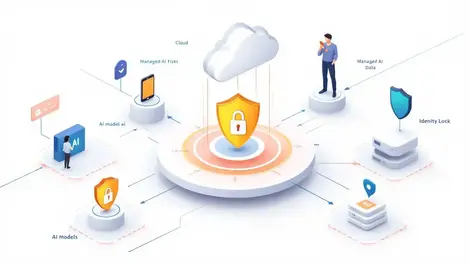
The wider partnership push aims to help enterprises control AI risk across cloud, identity and data systems as deployments move into production.
Audit trails for AI-generated code could get easier as the plugin exposes packages, dependencies and provenance inside Claude Code.
Governance fears and skills gaps are pushing businesses to deploy agentic AI in secure systems while protecting staff from disruption.
Periodic penetration tests miss most systems, prompting Australian and New Zealand firms to use AI-driven checks for broader coverage and faster risk spotting.
The alliance aims to help enterprises curb security and recovery risks as AI agents write and deploy code more widely.
Yet live deployments are causing headaches for engineering teams, with most respondents reporting more incidents and heavier rework after AI code goes live.
Phishing in workplace chat is prompting firms to harden Microsoft Teams as attackers increasingly exploit trusted internal messaging tools.
The move aims to speed up software-defined operations for banks, carmakers and manufacturers as AI takes a bigger role in engineering.
Banks must now spot whether a payment is genuine intent or manipulation before money leaves an account, amid rising AI scams.
Enterprise software teams are far more willing to use AI before production, with trust dropping from 82% at build to 58% at release.
The real payoff will come from governed workflows, as executives move beyond pilots and turn AI into a measurable business capability.
Skills shortages are now holding back Ireland's tech chiefs as AI investment jumps, with most firms still unable to deploy it at speed.