

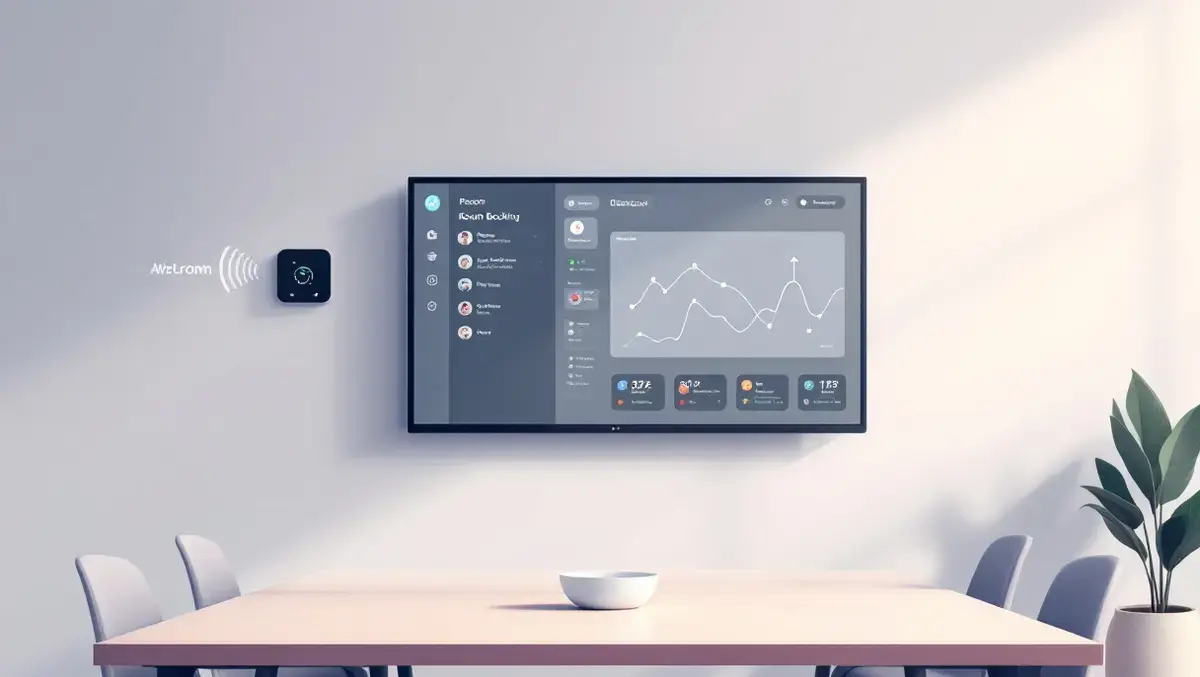
Logitech adds 10 Spot integrations for smarter workplaces
Wed, 26th Aug 2026
Logitech has added 10 partner integrations to its Spot workplace sensor, extending the device into room booking, workplace management, AV control and analytics systems.
The new integrations cover Appspace, Extron, Planon, Q-SYS, Robin, Spaceti, Utelogy, VergeSense, Xyte and Zoom. They allow data from Spot to feed directly into third-party platforms used by facilities, IT and workplace teams.
Spot is a presence and environmental sensor designed for offices and meeting rooms. It tracks occupancy, temperature, humidity, CO2, volatile organic compounds, particulate matter and barometric pressure.
By making that data available through its CollabOS and Sync Cloud application programming interfaces, Logitech is aiming to move the device beyond passive monitoring. Organisations can use partner software to trigger actions such as changes to room scheduling, space allocation and environmental management.
Room data
Several integrations focus on workplace planning. Planon, Spaceti and VergeSense combine occupancy trends from Spot with floor plans and booking information to help facilities teams forecast office space demand and identify rooms that may be overused or underused.
Another group of partners targets room reservations. Appspace, Robin and Zoom use Spot's real-time presence detection to support automatic room booking when someone enters a space, check-in for scheduled meetings and the release of rooms that remain empty.
This addresses a longstanding issue for office operators: booked meeting rooms left unused while staff search elsewhere for available space. By linking a sensor directly to reservation software, Logitech is seeking to narrow the gap between scheduled and actual use.
For IT and AV departments, Extron, Utelogy and Xyte bring Spot telemetry into central management dashboards. This gives teams a view of room usage alongside device status, helping them identify spaces where technical faults or environmental issues may affect performance.
Workplace conditions
Logitech is also positioning Spot as a tool for employee comfort. Environmental readings from the sensor can be shown on office maps, mobile apps or room displays, allowing workers to compare air quality and temperature before choosing where to sit or meet.
According to Logitech, Utelogy also lets organisations connect their own artificial intelligence tools to Spot data. One example is the ability to ask natural-language questions about rooms with poor air quality over a set period.
"Facilities and IT teams no longer have to guess where to cut costs or invest," said Henry Levak, General Manager, Team Workspace Solutions, Logitech.
"With Logitech Spot's new integrations, they get a self-optimising footprint that can cut energy use, prevent lease overcommitment, and keep employees focused. By connecting with the tools our customers already use daily, building healthier, automated, and far more efficient workplaces is easier than ever," said Levak.
Deployment model
Spot is designed for installation across office floors without new cabling. The sensor uses a peel-and-stick mount and connects over Bluetooth to Logitech CollabOS host devices or through long-range LoRaWAN gateways.
It can run for up to four years on a replaceable battery or use USB-C power. That setup is intended to make it easier for landlords, occupiers and workplace operators to install sensors in existing spaces without altering building infrastructure.
The product is certified as a RESET Grade B Air Accredited monitor, a standard used in the built environment sector to assess indoor air quality monitoring.
Broader push
The expanded partner list reflects a wider shift in office technology, with hardware vendors increasingly relying on software links with property, workplace and collaboration platforms. Rather than sell a standalone sensor, suppliers are trying to place their devices inside larger systems that manage desks, meeting rooms, air conditions and building operations.
For Logitech, the approach also extends its reach in workplace technology beyond cameras, meeting room devices and peripherals. With Spot, the company is trying to tie physical office conditions more closely to the software layers that govern how spaces are booked, monitored and used.
Spot and its partner integrations are now available globally.