

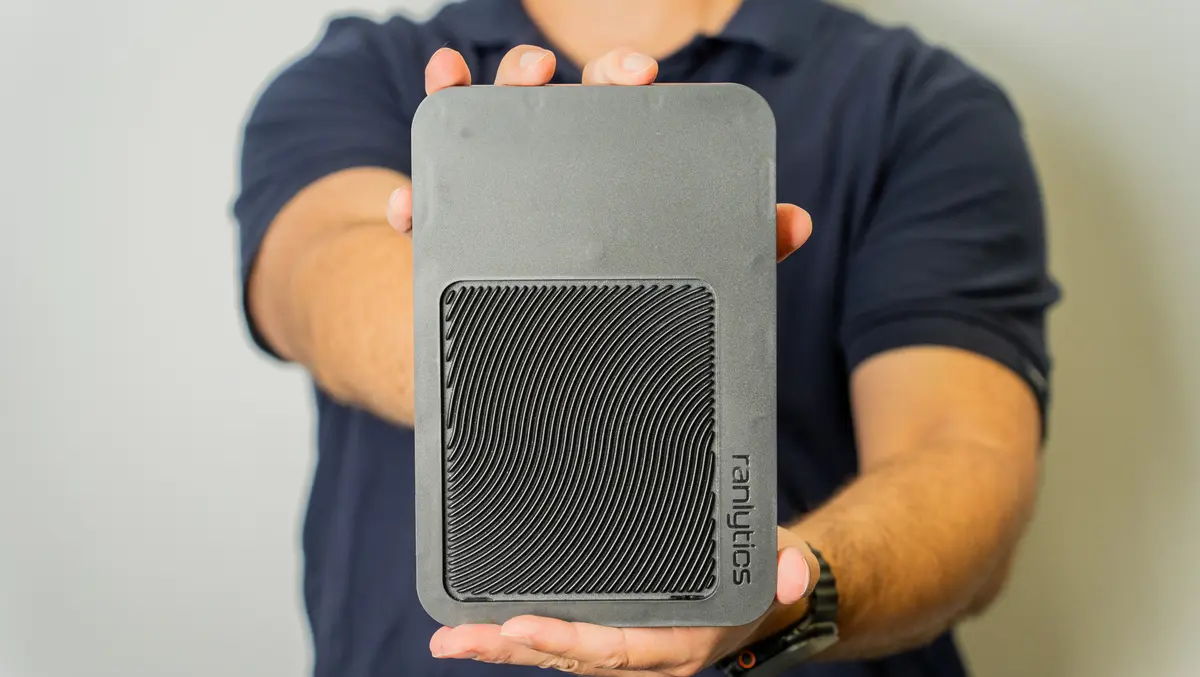
Ranlytics adds P25 monitoring to KALLO network tester
Wed, 6th May 2026
Ranlytics has added P25 public safety radio monitoring to its KALLO network testing device, enabling continuous monitoring of both cellular and P25 networks.
The Sydney-based company says KALLO gives operators ongoing visibility into coverage gaps, degradation and other faults without relying on periodic manual checks. Paired with a cloud-based analytics platform, the device is intended for use in buildings, hospitals and stadiums.
The addition expands a product originally built for cellular networks into public safety communications, where coverage and resilience are closely monitored. P25 digital radio is widely used by emergency services organisations to support communications between police, ambulance and fire services on shared networks, and is also used in sectors including mining.
P25 support was developed through research and development work at Ranlytics' headquarters in Artarmon, where the devices are designed and manufactured. The company used software-defined radio technology and its experience in P25 systems to add the new function to KALLO.
Ranlytics argues that current network performance checks are often labour-intensive and infrequent. Traditional testing can involve technicians carrying specialist equipment through buildings or conducting drive tests, then processing the results into reports.
Peter Papaioannou, Managing Director of Ranlytics, said radio network operators face a choice between repeated physical testing and continuous monitoring.
"Radio networks, cellular and P25, are extremely dynamic and are always changing environments resulting in the owners and operators of the radio networks having to assume if they are meeting their customer obligations," Papaioannou said.
"Because of these constant changes, operators need to either constantly go out and physically test, which is an expensive, complicated, resource-intensive and slow exercise, or do something completely different.
"By using KALLO's cost-effective, fully automated monitoring device, network operators gain continuous real-time visibility into network performance and health. With KALLO, operators know the minute that something is starting to degrade, before this degradation results in an outage."
Indoor coverage
Ranlytics is positioning the product in part around indoor coverage, which can be difficult to assess and maintain over time. Buildings may have acceptable signal levels when first tested, but changes in the surrounding environment can affect reception later.
This is particularly important in public safety settings, where emergency responders may depend on consistent radio coverage inside commercial or public buildings. In some parts of the United States, proof of P25 coverage in commercial buildings is tied to occupancy approvals and insurance requirements.
Papaioannou said building checks are usually sporadic and can miss deterioration between inspections.
"The only way to do that today is to send someone in with an expensive scanner device strapped to their back, walk around, collect the data, turn that into a report which can take hours if not days, and submit it. That's a 'one-off' activity performed every couple of years," he said.
He cited nearby construction as an example of how coverage can change after a building has already been approved.
"A tenant might be in a building with great coverage, only to find that neighbouring construction work has placed them in shadow and they no longer have consistent cellular or P25 coverage anymore. If this goes unrecognised and undetected until the next in-person test, that might be too late for emergency first responders that rely on the coverage for an incident response.
"With KALLO, rather than having infrequent check-points, building owners and tenants can maintain continuous visibility of coverage and be made aware of any degradation or issue quickly so it can be rectified."
Cost and scale
One of the main challenges in building the product was reducing the cost enough to allow wider deployment. Ranlytics says the compact unit costs less than a standard mobile phone, which it sees as important if operators are to place devices across large estates rather than at only a handful of locations.
The device is also automated and designed to operate without regular on-site intervention. That could appeal to telecoms operators, public safety network managers and owners of critical infrastructure seeking broader oversight of network conditions across multiple sites.
Papaioannou said affordability was central to the development effort.
"It's easy to build one of these for $20,000, but it would have severely limited deployment scale," he said.
He said reaching a lower price point while keeping the system automated took years of work.
"To do this at the price point we've been able to, and with the full automation, has taken years to solve.
"Building something this affordable and that can be pushed out into environments at a scale not seen before is important. Our intent is to replace traditional walk testing and to verify network coverage. KALLO's price point means operators can just install it, 'set and forget', saving them money over many years."